
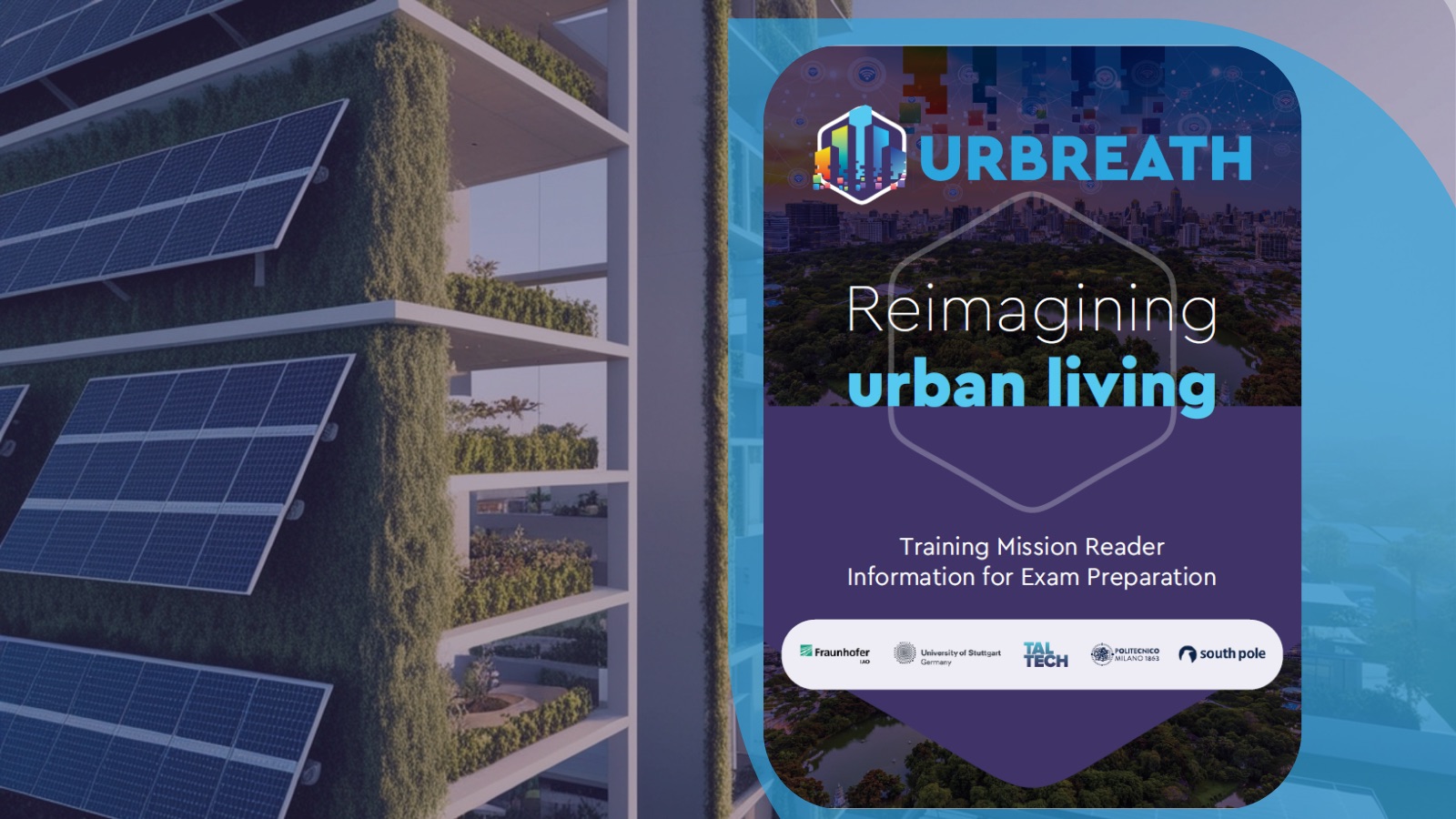
From knowledge to implementation: a new resource supporting European cities in their transition towards climate-neutral, resilient and people-centred urban environments.
How can cities successfully move from ambitious climate targets to practical action?
How can local authorities design, finance, govern and implement Nature-based Solutions that deliver lasting environmental and social benefits?
These are some of the questions addressed by the newly published “Reimagining Urban Futures – Training Mission Reader”, developed within the Horizon Europe URBREATH project.
The publication brings together the knowledge generated during the 2025 URBREATH Training Mission, transforming it into an openly available learning resource for municipalities, urban planners, researchers and practitioners working on sustainable urban development.
As European cities face growing pressures from climate change, biodiversity loss, urbanisation and limited public resources, Nature-based Solutions are increasingly recognised as a systemic approach capable of addressing multiple urban challenges simultaneously.
Rather than focusing solely on green infrastructure, the Training Mission Reader presents Nature-based Solutions as integrated interventions that combine environmental, social and economic benefits while improving resilience, public health and quality of life. Successful implementation, however, depends not only on ecological design but also on governance, stakeholder engagement, financing and long-term management.
To support this transition, the URBREATH Training Mission was designed to equip representatives from partner cities with the knowledge and practical skills required to become Nature-based Solutions Change Agents capable of driving urban transformation in their local contexts.
The Training Mission involved contributions from researchers and practitioners representing several European cities, including Madrid, Leuven, Tallinn, Athens, Kajaani, Aarhus, Parma and Pilsen, ensuring that the guidance reflects diverse climatic zones, governance structures and local realities.
This diversity reinforces one of the publication’s central messages: while Nature-based Solutions share common principles, successful implementation always requires adaptation to local environmental, institutional and societal conditions.
More information can be found here.