
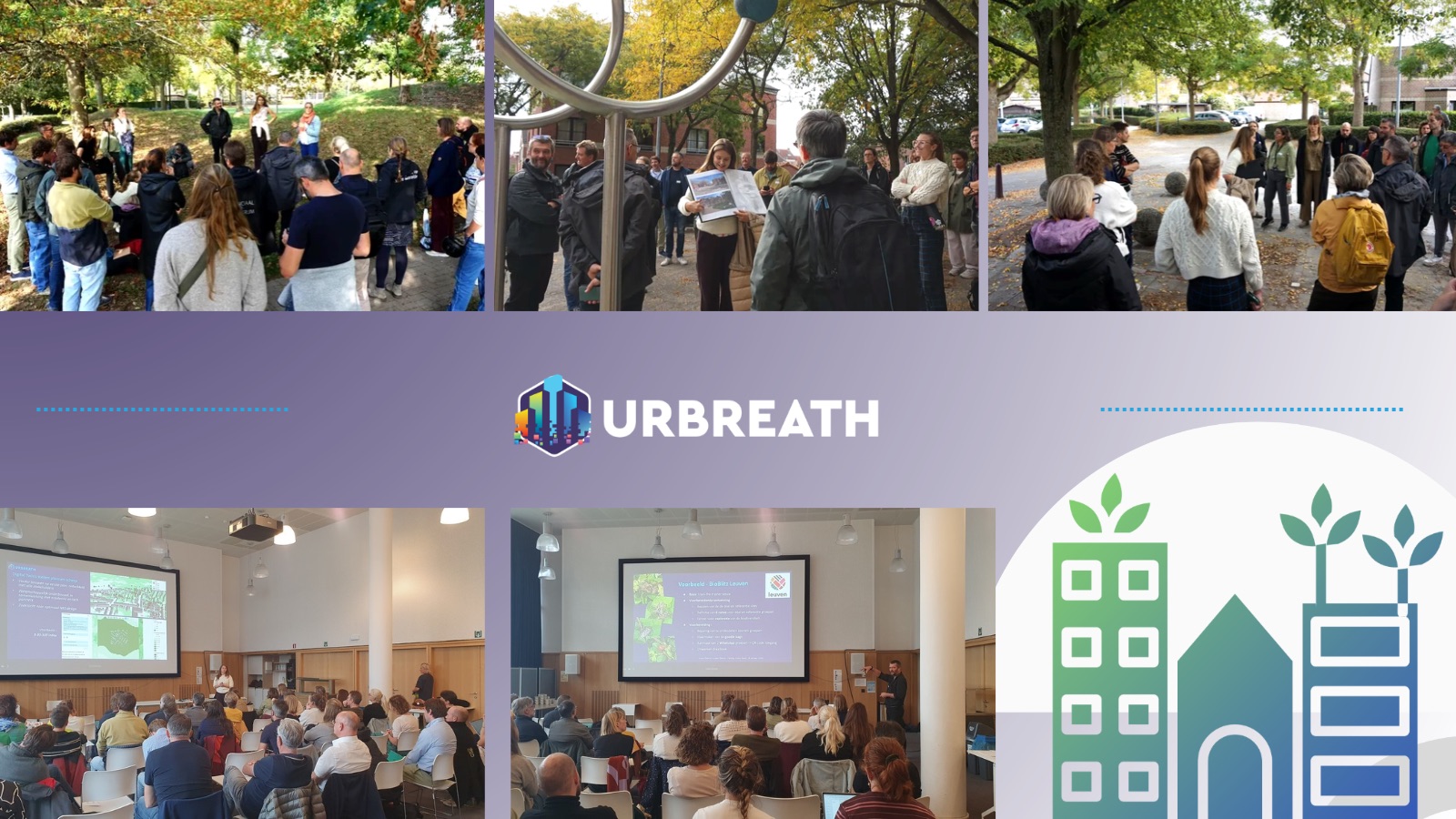
On 16 October 2026, around 70 participants gathered at the Flemish Administrative Centre in Leuven for an information day on “Measurable Climate Impact”. Organised by the Green Deals “Natuurinclusieve Parkeerterreinen” and “Tuinstraten”, the event explored how monitoring can do more than generate knowledge: it can also help drive change. The programme examined how data can support shared learning, improve management and policy, engage citizens, and guide practical action towards more climate-resilient and liveable environments. WP5 observations and lessons learned are:
- The programme opened with an introduction by Helen De Weser of Natuurbuur and Sandy Adriaenssens of Viaverda.
- Koen Wynants from Commons Lab presented a commons-based approach to monitoring in Borgerhout, illustrating how residents can contribute to data collection, learning, design and neighbourhood management. He also works on INNATURE, a Horizon Europe project running from September 2025 to September 2029, funded through the EU Research and Innovation Programme. For URBREATH, a particularly interesting insight was the use of a local bird species as an ambassador for nature. This gave a tangible representation to nature, which many regard as the fifth helix complementing the quadruple-helix model used to categorise stakeholders in Nature-based Solutions.
- Hannes Ledegen from Natuurpunt Studie introduced ObsIdentify, a smartphone app for identifying wild plants and animals from photographs and recording observations for biodiversity research. He showed how gamification, challenges and competition can make biodiversity monitoring more engaging and encourage participation among different stakeholders. The free version of the app was used during the URBREATH Bioblitz organised in Leuven on 19 April 2026. The presentation also highlighted how the paid version could benefit URBREATH.
- Siebe Puynen of Antea Group and Ghent University discussed microclimate and heat-stress monitoring in sustainable urban development. He demonstrated how measurements can reveal the effects of trees, water and depaving during hot weather and inform urban design and planning. For URBREATH, the presentation highlighted links to the models in our Toolbox and the need for care when communicating and comparing heat-stress data.
- After lunch, Sanne de Rooij from CitizenScienceSupport presented citizen science initiatives focused on air quality, mobility and environmental noise. These large-scale examples showed how accessible monitoring tools can help citizens better understand their neighbourhoods while generating valuable data for research, policy and action. A key insight for URBREATH’s technical partners was that many cities lack access to tools already available in the URBREATH Toolbox, creating opportunities to collaborate with these cities on tool testing.
- Laura Dens from the City of Leuven and Jurgen Silence from Digital Flanders presented URBREATH, focusing on Living Labs and the Leuven pilot. Using the redevelopment of Krakau Square in Kessel-Lo as an example, they explained how the city combines Local Living Labs, Nature-based Solutions, monitoring and digital tools, including a Local Digital Twin, to create climate-resilient public space with local residents’ support. The case showed how co-creation, modelling and monitoring can be integrated throughout the development process to address biodiversity, heat stress, water, mobility and the quality of public space.
The presentations were followed by a 75-minute field visit to Krakau Square, where participants explored the current situation and the transformation planned under URBREATH. Digital simulations displayed on laptops and tablets illustrated the proposed redesign, while a series of images showed how the design had evolved through collaboration with residents and other stakeholders. Together, these visualisations demonstrated how digital tools can make proposed changes tangible before implementation. Monitoring was another central theme. Participants learned about the soil sensors and weather station installed at the site and the Bioblitz used to establish a biodiversity baseline against which future changes can be tracked. Discussions explored how the 3-30-300 rule and the Biotope Area Factor (BAF) informed the design, alongside considerations of heat stress, flood risk, shading and mobility changes. Examples from other ongoing initiatives in Leuven illustrated how monitoring can support short-term site management while providing longer-term evidence for urban planning and policy.
- After the field visit, Joke Flour from Commons Lab discussed the role of language, images, frames and counterframes in communicating about depaving and greening projects. Drawing on experiences from “Tuinstraten” and other initiatives, she showed how communication can encourage experimentation, local initiative and collaboration. The presentation offered new insights into a topic previously covered in an URBREATH train-the-trainer session with the pilot cities. The Green Deals closed the day with information on additional monitoring and planning tools.
Overall, the event showed how monitoring technologies, citizen science, co-creation and communication can work together to support urban transformation—not only by measuring change, but also by helping to drive it.
LinkedIn post
How can monitoring help cities move from measuring climate impact to driving change?
On 16 October 2026, around 70 participants gathered in Leuven for the “Measurable Climate Impact” information day, organised by the Green Deals “Natuurinclusieve Parkeerterreinen” and “Tuinstraten”. The programme connected citizen science, biodiversity monitoring, microclimate measurements and communication with practical lessons for climate-resilient cities.
For URBREATH, key takeaways included giving nature a tangible voice in co-creation, engaging residents through tools such as ObsIdentify—also used at Leuven’s URBREATH Bioblitz on 19 April 2026—and communicating heat-stress data carefully. Discussions also highlighted opportunities to test URBREATH Toolbox tools with cities that lack access to them, and the importance of language and imagery in building engagement around urban greening.
Laura Dens from the City of Leuven and Jurgen Silence from Digital Flanders presented how URBREATH combines Local Living Labs, Nature-based Solutions and a Local Digital Twin. A field visit to Krakau Square in Kessel-Lo brought this approach to life: digital simulations illustrated the planned transformation, while soil sensors, a weather station and biodiversity observations showed how monitoring can inform design and track change.
The central message? Monitoring is not just about collecting data. Combined with co-creation and clear communication, it can support shared learning, better decisions and practical action.
#URBREATH #CitizenScience #NatureBasedSolutions #LivingLabs #DigitalTwins #ClimateResilience #Leuven